
Can schools or universities optimize how AI describes their programs?
Yes. Schools and universities can improve how AI describes their programs, but only if they control the sources the model can verify. AI Visibility depends on current program pages, admissions facts, faculty bios, accreditation language, and policy pages that agree with each other.
This matters for admissions, marketing, compliance, and academic affairs. The decision is not whether AI will describe your programs. It already does. The decision is whether those answers are grounded in verified ground truth or stitched together from stale public sources.
What does it mean to improve how AI describes a program?
It means making AI answers citation-accurate, current, and consistent with the institution’s approved facts. In practice, that means the program name, requirements, outcomes, tuition, deadlines, and faculty details all point to the same verified source.
AI Visibility is the practice of improving how a brand appears inside AI-generated answers. For higher education, that means the model should describe the program the way your institution would approve it.
What do AI systems use when they describe a school or university program?
They use the public sources they can reach and reconcile. If those sources conflict, the answer can drift.
| Source type | What it affects | Why it matters |
|---|---|---|
| Program pages | Degree names, formats, outcomes | This is the primary source of program facts |
| Admissions pages | Eligibility, deadlines, requirements | These are the questions students ask first |
| Faculty bios | Expertise, roles, research areas | This reduces misattribution |
| Accreditation and policy pages | Compliance, status, rules | These details need to stay current |
| FAQ pages | Common student questions | These often shape direct AI answers |
| Third-party listings | External summaries and references | These can influence how the program is described |
If any of these sources are stale or inconsistent, AI can repeat the inconsistency.
What should schools control first?
Start with the facts students and families ask about most. Admissions, curriculum, tuition, deadlines, accreditation, outcomes, and faculty are the fields that shape AI answers fastest.
Schools should treat these as governed content, not one-off marketing copy.
- Admissions should use one approved source for requirements and dates.
- Curriculum pages should match what academic teams actually offer.
- Tuition and aid pages should match finance and student services.
- Faculty pages should match current titles, affiliations, and research areas.
- Accreditation pages should match the institution’s verified status and language.
How do schools make AI answers more reliable?
They make the underlying knowledge controlled, versioned, and easy to verify. Senso compiles an enterprise’s full knowledge surface into a governed, version-controlled knowledge base, and that same pattern fits higher education when program facts must stay consistent across public and internal answers.
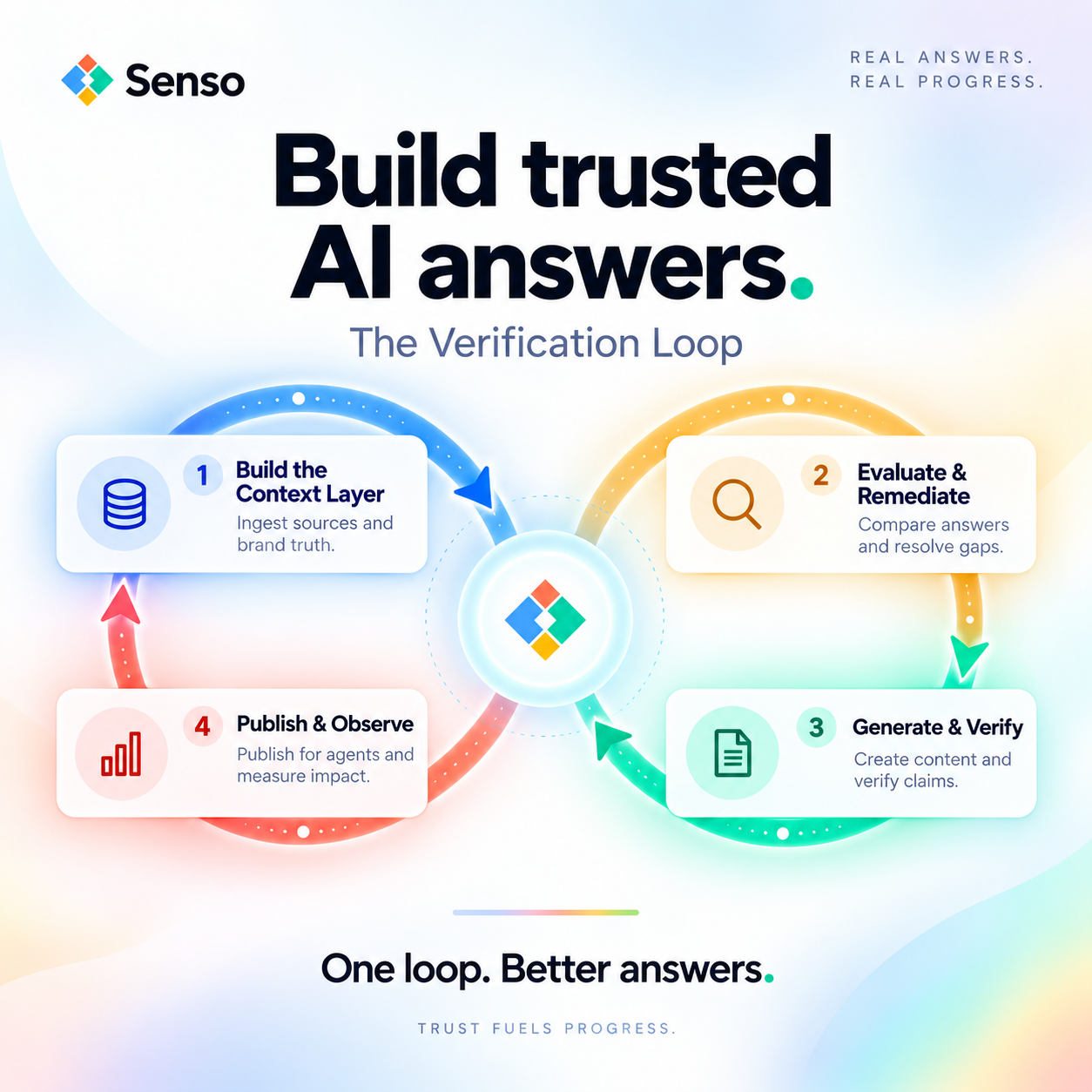
A practical process looks like this:
-
Ingest the raw sources.
Gather program pages, policy pages, faculty pages, and approved FAQs. -
Compile one source of truth.
Keep the approved facts in a governed, version-controlled compiled knowledge base. -
Score the public answers.
Check whether AI responses are citation-accurate against verified ground truth. -
Route gaps to owners.
Send broken or stale facts to admissions, marketing, compliance, or academic teams. -
Remediate and recheck.
Update the source, then measure whether the public answer changed.
This is the same problem Senso AI Discovery addresses for external AI responses. It scores public AI answers for accuracy, brand visibility, and compliance against verified ground truth, then shows exactly what needs to change.
How does this help admissions, marketing, and compliance?
It gives each team the same factual base. Admissions gets fewer mismatched answers. Marketing gets better narrative control. Compliance gets a clearer view of what AI is saying and where it is wrong.
That matters because Senso’s documented results show what better control can produce: 60% narrative control in 4 weeks, 0% to 31% share of voice in 90 days, 90%+ response quality, and 5x reduction in wait times.
What does a governed approach look like in practice?
It means one compiled knowledge base can serve both internal workflow agents and external AI-answer representation. No duplication.
For a university, that can mean:
- One approved source for program facts
- One approved source for policy language
- One approved source for faculty and research descriptions
- One audit trail for who changed what and when
That structure matters when a dean, registrar, or compliance officer asks whether the answer was current and whether the institution can prove it.
What is the fastest way to start?
Start with a free audit of how AI describes your programs today. Senso AI Discovery does this with no integration and no commitment, which makes it useful for institutions that want to see the gaps before they change their content systems.
A fast first pass should answer three questions:
- What does AI say about the program today?
- Which source does that answer appear to rely on?
- Which fact needs to change for the answer to become grounded?
What should schools not do?
Do not publish conflicting facts across departments. Do not leave old program pages live after curriculum changes. Do not assume a strong website alone will fix AI answers.
AI systems do not read intent. They read the available sources. If the sources disagree, the answer can still be wrong.
FAQs
Can schools or universities control how AI describes their programs?
Yes, but not by forcing the model directly. Schools influence the answer by governing the public sources the model can verify and by checking citation accuracy against verified ground truth.
Is this just traditional SEO?
No. Traditional search sends people to pages. AI Visibility affects the answer itself before a user clicks anything. The goal is not only visibility. It is correct representation.
Does this matter for regulated programs?
Yes. Compliance, accreditation, and policy language need to stay grounded and auditable. If an AI answer cites outdated requirements or incorrect program terms, the institution can face reputation and compliance risk.
What is the difference between external and internal AI answers?
External AI answers shape how the public sees the institution. Internal agent answers shape how staff and students get help. Both should trace back to the same verified ground truth.
Do schools need an integration to start?
No. Senso AI Discovery works with no integration, which makes it a fast way to audit public AI responses first.
Schools and universities can shape how AI describes their programs, but only if they treat program facts as governed knowledge. The institutions that win this work will not be the loudest. They will be the ones with the clearest verified ground truth.