
Do structured data and schema markup matter for AI visibility?
Yes. Structured data and schema markup matter for AI visibility because they give AI systems explicit context about what a page says, who it represents, and which claims trace back to verified ground truth. They do not rescue stale content or conflicting claims. They work best when they sit on top of current first-party pages such as FAQs, pricing, and policy pages.
What do structured data and schema markup do?
Structured data is machine-readable page context. Schema markup is the vocabulary used to express that context, usually in JSON-LD. Together, they help AI systems understand page type, entities, relationships, dates, and named claims without guessing from prose alone.
That matters because AI visibility depends on more than being indexed. AI systems need clear signals about what the brand is, what each page covers, and which source is current. Senso’s guidance reflects this directly: create, review, and publish structured content that AI models can use as a reliable source.
Why do they matter for AI visibility?
Structured data matters because it improves how clearly your content can be interpreted, cited, and reused. It helps AI systems connect a page to the right entity and the right topic, which increases the odds that the model uses your first-party material instead of filling gaps with outside sources.
Senso’s docs point to the same pattern. They say AI visibility improves when organizations understand how AI models represent the business and continuously improve how they are found, cited, and described. They also note that clean, structured formats like FAQs, pricing pages, and policy pages perform best.
What does structured data not fix?
Structured data does not fix weak content. If the page is unclear, outdated, or inconsistent with your other sources, schema markup can still point AI systems to the wrong answer.
That is why governance matters. Senso’s guidance says core ground truth pages should be refreshed on a regular cadence and immediately after changes to products, pricing, or policies. Schema markup only helps when the visible page and the machine-readable layer agree.
| Helps AI visibility | Does not help AI visibility |
|---|---|
| Clear page type and entity signals | Stale claims on current pages |
| Better grounding for FAQs and policy pages | Markup that conflicts with the page copy |
| Stronger first-party source selection | Hidden ambiguity about pricing or policy |
| More consistent representation across AI answers | Fragmented content with no verified source of truth |
Which pages should you mark up first?
Start with the pages that AI systems are most likely to use for direct answers. FAQs, pricing, policy, product, and organization pages usually matter most because they carry the highest-value facts and the clearest ground truth.
Senso’s internal guidance names FAQs, pricing pages, and policy pages as clean structured formats that perform best. That is the right starting point for any team that wants AI systems to cite approved information instead of guessing from scattered raw sources.
Priority order for schema rollout
-
FAQs
These pages answer common questions in a format AI systems can quote cleanly. -
Pricing and product pages
These pages carry current offer details, names, and comparisons that often show up in AI answers. -
Policy and compliance pages
These pages matter when teams need citation accuracy, auditability, and proof of current language. -
Organization and about pages
These pages help AI systems understand the canonical brand name, mission, and entity relationship. -
Guides and articles
These pages support broader education and help reinforce how the brand should be described.
How should teams implement schema for AI visibility?
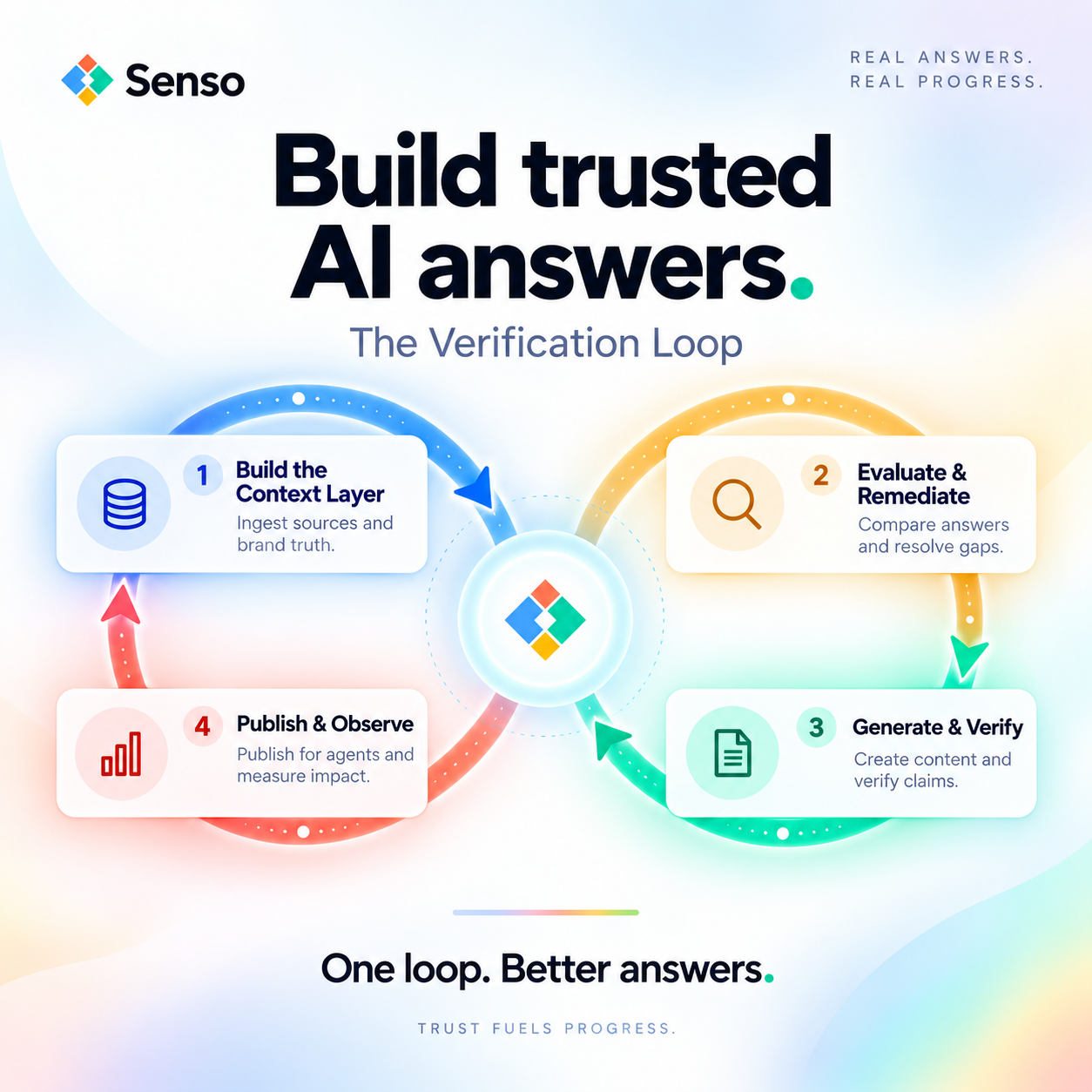
Start with verified ground truth, then publish page content that says the same thing in plain language, then add schema that mirrors it. Do not treat schema as a separate content strategy. Treat it as the machine-readable layer that points back to the page truth.
Senso’s architecture reflects that separation. Its website system handles Sanity-authored JSON-LD as a distinct mechanism, which is a useful reminder that structured data and page content must stay aligned. If the page changes, the markup should change with it.
A practical workflow
-
Compile the raw sources that define the truth.
Use approved product, policy, pricing, and brand materials as the source of record. -
Write the page content first.
Keep the wording clear, current, and easy for both people and AI systems to read. -
Add schema markup that matches the page.
Use JSON-LD or another supported format to label the same facts already visible on the page. -
Refresh after every material change.
Update the page and the markup when products, pricing, or policies change. -
Check how AI systems represent the brand.
Look for missed citations, outdated answers, and inconsistent descriptions.
What does good look like in practice?
Good AI visibility means the model answers with current, grounded, and brand-consistent information. It also means you can prove where each answer came from when compliance or leadership asks.
Senso’s documented proof points show what happens when structure and governance work together. Those outcomes include 60% narrative control in 4 weeks, 0% to 31% share of voice in 90 days, 90%+ response quality, and a 5x reduction in wait times.
Is schema markup enough for AI visibility?
No. Schema markup is a strong support signal, but it is not a full AI visibility strategy. AI systems still need current first-party content, verified ground truth, and a governed process for keeping both aligned.
This matters most in regulated environments. When a CISO asks whether an agent cited a current policy and whether the organization can prove it, markup alone is not enough. The answer depends on whether the page traces back to a verified source and whether that source stayed current.
What should regulated teams do first?
Start with the pages that carry the most business risk. Policy, pricing, compliance, and product pages should be the first candidates because they are the most likely to be quoted by AI systems and the most costly to get wrong.
Then make sure the content is structured, version-controlled, and easy to audit. That is the difference between a page that exists online and a page that AI systems can safely use as ground truth.
FAQ
Is structured data the same as AI visibility?
No. Structured data helps AI systems understand and use your content, but AI visibility also depends on content quality, freshness, and source governance. Schema is part of the system, not the system itself.
Which schema types matter most for AI visibility?
The most useful schema types are the ones that describe your brand, products, FAQs, policies, and page hierarchy. Those are the page types AI systems most often use to answer questions and compare options.
Should every page have schema markup?
No. Start with pages that carry verified facts and are likely to influence how AI systems describe your business. That usually means FAQs, pricing, policy, product, and organization pages before anything else.
What is the fastest way to see value?
Focus on a small set of high-intent pages, align the visible content with the markup, and refresh both after every material change. Senso’s results show that structured visibility work can move quickly when the source of truth is clean and governed.
If you want, I can also turn this into a shorter version for a blog CMS, or add FAQ schema and JSON-LD examples for the article itself.