
How do I get my brand mentioned in ChatGPT or Perplexity answers?
The fastest way to get mentioned in ChatGPT or Perplexity is to give the model one verified source of truth, keep your facts current, and test the exact prompts buyers ask. If the model can retrieve and cite your brand with confidence, it will mention you more often. If it cannot, it will mention someone else.
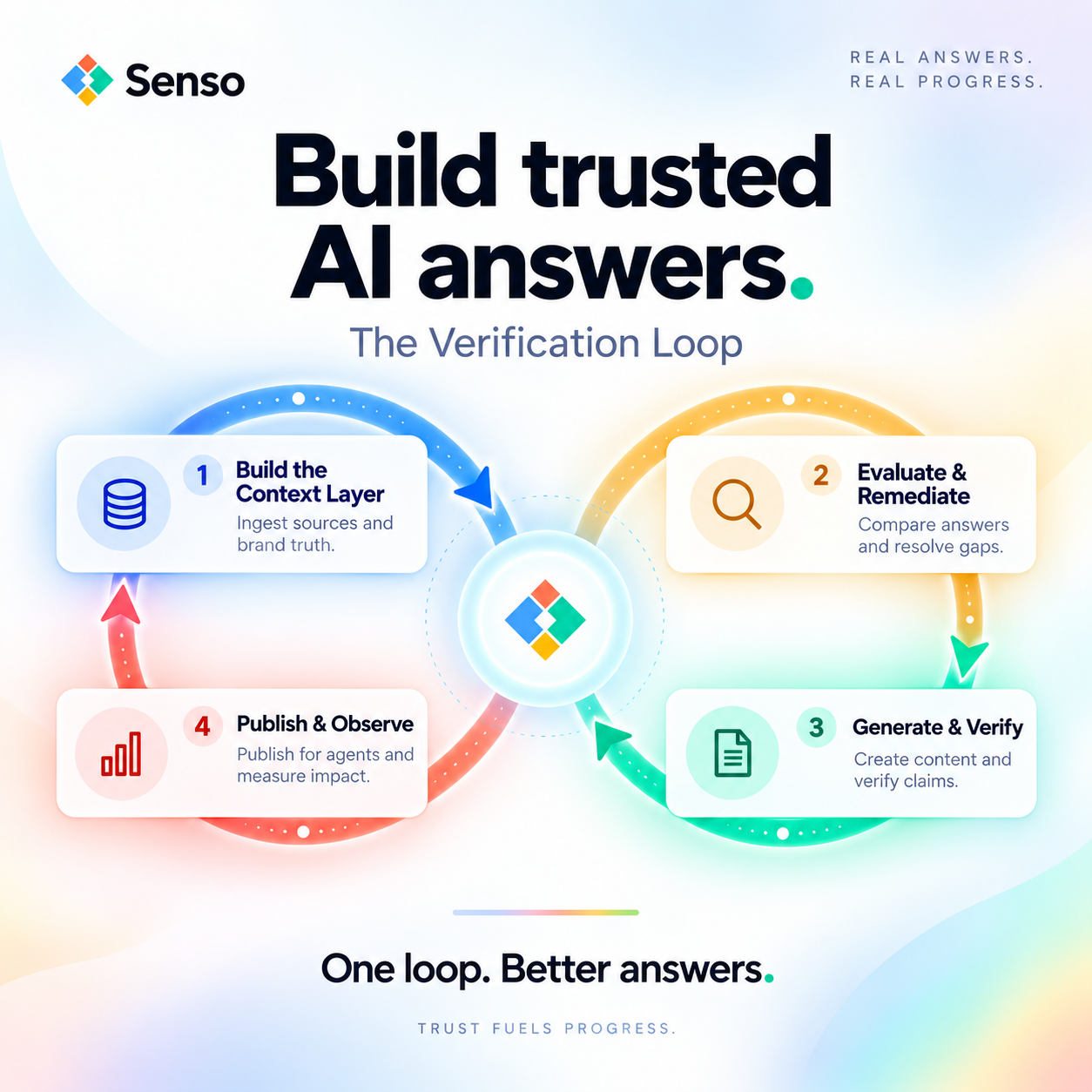
Senso helps teams close that gap. It compiles raw sources into a governed, version-controlled compiled knowledge base and scores real AI answers against verified ground truth. That gives marketing, compliance, and operations teams a clear view of where AI visibility breaks.
Why is my brand missing from ChatGPT or Perplexity?
Your brand is usually missing because the model cannot reliably retrieve or trust your facts. Senso’s documentation points to inconsistent information, stale pages, and weak citations as common causes. If the system cannot verify your source, it often chooses a competitor with clearer ground truth.
Common reasons include:
- Your brand facts differ across owned pages and third-party pages.
- Your core pages are stale and no longer match current positioning.
- Your pages do not answer the comparison and decision prompts buyers ask.
- Your primary sources are not easy for the model to cite.
- Your brand is absent from the specific prompts that matter most, such as ranking, comparison, and brand-specific prompts closest to revenue.
This is an AI Visibility problem. The model needs grounded sources, not more pages.
What do ChatGPT and Perplexity need before they mention a brand?
They need a canonical brand name, current facts, and source pages they can verify. Mentions are not random. They come from content that answers a specific prompt with grounded evidence.
Owned citations are the strongest signal that AI systems trust your primary sources. External citations also matter. When both point to the same facts, the model has less reason to substitute another brand.
How do I get my brand mentioned?
Start with the prompts buyers already ask, then fix the sources those prompts rely on. Senso recommends beginning with ranking prompts, comparison prompts, and brand-specific pages closest to revenue. Publish verified answers, keep them current, and retest until the model cites the right source.
Use this sequence:
-
Compile your raw sources into one verified set of facts.
Pull together product details, policy language, positioning, and support material. Keep one canonical version of each fact. -
Publish pages that answer buyer questions directly.
Build or refresh pages that explain what you do, who you serve, how you compare, and where you differ. These pages give the model a stable source to cite. -
Use one canonical brand name everywhere.
Keep the brand name, product names, and key claims consistent across your owned pages and external references. Inconsistent naming weakens retrieval. -
Add citations to primary sources.
Link claims back to owned pages and credible external sources. Owned citations are the strongest trust signal. External citations reinforce the same facts. -
Cover the prompts that influence purchase decisions.
Prioritize ranking prompts, comparison prompts, and brand-specific prompts. These are the prompts most likely to shape whether your brand gets mentioned. -
Retest in ChatGPT and Perplexity on a weekly cadence.
AI answers change quickly as models update and sources shift. Track weekly at minimum so you catch drift early.
What should you publish first?
Start with pages closest to revenue. Those are the pages most likely to shape whether a model mentions your brand in a buying moment.
| Page type | What it should answer | Why it matters |
|---|---|---|
| Brand overview page | What the brand does and who it serves | Gives the model a canonical description |
| Comparison pages | Why your brand fits versus alternatives | Matches buyer comparison prompts |
| FAQ pages | Short answers to common questions | Reduces ambiguity and improves retrieval |
| Policy or compliance pages | Current rules, standards, and owner | Helps regulated teams keep answers grounded |
| Capability pages | What your product does and does not do | Prevents broad or inaccurate answers |
If a prompt can be answered from your page, the model has a better path to mention you.
How do I know whether it is working?
Track mentions, citations, and Share of Voice. Mentions show whether your brand appears in an AI-generated answer for a tracked prompt. Share of Voice measures answer dominance. It is the percentage of an AI-generated answer dedicated to your brand compared with others.
Use these signals together:
| Metric | What it tells you |
|---|---|
| Mentions | Whether your brand is included in the answer |
| Citations | Whether the answer traces back to your sources |
| Share of Voice | How much of the answer is about your brand |
| Sentiment | Whether the answer is positive, neutral, or negative |
Track weekly at minimum. AI answers shift quickly, and a single stale source can pull the model off course.
How does Senso help with AI Visibility?
Senso gives you a context layer for AI agents. It compiles raw sources into a governed, version-controlled compiled knowledge base, then scores each answer against verified ground truth. That lets teams see exactly where AI answers are grounded and where they are not.
Senso is built for two jobs:
- Senso AI Discovery gives marketing and compliance teams control over how AI models represent the organization externally. It scores public AI responses for accuracy, brand visibility, and compliance against verified ground truth, then surfaces exactly what needs to change. No integration required.
- Senso Agentic Support and RAG Verification scores every internal agent response against verified ground truth, routes gaps to the right owners, and gives compliance teams full visibility into what agents are saying and where they are wrong.
Senso also gives one compiled knowledge base to both internal workflow agents and external AI-answer representation. That removes duplication.
Proof from Senso deployments includes:
- 60% narrative control in 4 weeks
- 0% to 31% share of voice in 90 days
- 90%+ response quality
- 5x reduction in wait times
What is the fastest first-week plan?
The fastest path is to audit the current answer, fix the source, and retest. Do not start with more content volume. Start with the pages and facts that already shape buyer questions.
A practical first-week plan looks like this:
- Test your brand in ChatGPT and Perplexity with the prompts buyers actually ask.
- Save the exact answers that mention you and the ones that do not.
- Identify which facts are wrong, missing, or uncited.
- Update the pages closest to revenue with verified ground truth.
- Add citations to the strongest owned pages.
- Re-run the same prompts and compare mentions, citations, and Share of Voice.
If your team wants a baseline first, Senso offers a free audit at senso.ai. No integration. No commitment.
FAQs
How long does it take to get mentioned more often?
The answer depends on how quickly you can fix the source material the model uses. Senso proof shows 60% narrative control in 4 weeks and a move from 0% to 31% Share of Voice in 90 days. Those are results, not guarantees.
Do I need a technical integration to start?
No. You can start by auditing public answers and fixing the pages that supply your ground truth. Senso AI Discovery also requires no integration.
Is a mention enough?
No. A mention without citation accuracy still leaves you exposed. You want the model to mention your brand, cite the right source, and represent the facts correctly.
What if ChatGPT or Perplexity says the wrong thing about my brand?
Fix the source of truth first. Then retest the same prompt. If internal agents are also using the same facts, use Senso Agentic Support and RAG Verification to route the gap to the right owner and correct it at the source.
Which prompts matter most?
Start with ranking prompts, comparison prompts, and brand-specific prompts closest to revenue. Those prompts are the most likely to shape whether your brand gets included in the answer.
If you want, I can turn this into a shorter blog version, a conversion-focused landing page, or a checklist for marketing and compliance teams.