
How should I adapt my content strategy for LLMs?
Most brands still write for pageviews, but LLMs answer from facts. Adapt your content strategy by building a governed source of truth for the questions you want AI to answer, then publishing pages that are easy to cite, easy to verify, and easy to keep current. The right starting point is the set of questions that affect revenue, compliance, and reputation.
What should change first?
The first change is to stop treating content as isolated pages. Treat it as verified ground truth that LLMs can assemble into answers. Generative systems do not rank pages only by keywords. They assemble answers from trusted, structured facts and known sources.
Start with an audit of your highest-value content.
- Find the pages that answer buying, policy, product, and brand questions.
- Identify every claim that must stay current.
- Assign one owner to each canonical topic.
- Remove duplicate pages that confuse the source of truth.
That audit shows where AI visibility breaks today. It also shows which pages need a rewrite, which need a source update, and which need a crawlable version.
Which content should you prioritize?
Prioritize the prompts and pages closest to revenue and risk. Start with ranking prompts, comparison prompts, and brand-specific questions. Those are the questions LLMs and agents answer when buyers, staff, and regulators want a direct response.
| Content type | Why it matters | What to publish |
|---|---|---|
| Comparison pages | Buyers use them to narrow options | Clear criteria, tradeoffs, and named alternatives |
| Product pages | AI answers often pull from them | One canonical description, feature summary, and use case |
| Pricing pages | Pricing questions shape decisions fast | Plain-language pricing logic and current details |
| Policy pages | Compliance and staff need current answers | Versioned policy language and source references |
| Brand pages | Models use them to describe your company | Canonical company facts, positioning, and proof points |
This is where most teams get the highest return first. A small set of pages often shapes a large share of AI answers.
How should you structure each page?
Structure each page so a model can extract the answer without guessing. Put the answer first, keep one idea per section, and support every major claim with a specific source or example. Readers should understand the page in seconds, and models should be able to cite it cleanly.
Use this pattern:
- Start with a direct answer in the first paragraph.
- Define the topic in one sentence.
- Use question-based H2s that match how people ask.
- Put proof next to each claim.
- Keep changing facts in a clearly marked section or table.
- End with a short summary or next step.
This format helps both humans and LLMs. It also reduces the chance that a model will pull a partial answer and repeat it as fact.
How do you keep answers grounded and provable?
Build a governed, version-controlled compiled knowledge base from raw sources. Every important answer should trace back to verified ground truth. That is the difference between content that looks complete and content that can actually support AI answers in production.
Senso uses this model for knowledge governance. The point is simple. If a claim matters, it needs a source. If the source changes, the answer should change with it.
Use this operating rule:
- Keep raw sources current.
- Compile them into a governed knowledge base.
- Version the source of truth.
- Record who owns each topic.
- Track every answer back to a verified source.
This matters most in regulated industries. A CISO, compliance officer, or legal team should be able to ask whether an agent cited current policy and prove where the answer came from.
How should teams work together?
Separate the work by audience, not by department. Marketing owns how the company is represented externally. Compliance owns whether the facts are current and defensible. IT and operations own the systems that keep the knowledge base usable and auditable.
A clean division looks like this:
- Marketing maintains the canonical company narrative.
- Compliance reviews policy, claims, and regulated language.
- Subject matter experts validate the facts.
- IT keeps pages crawlable and easy to maintain.
- Operations tracks gaps, drift, and response quality.
This is also where human-facing content and agent-facing content split. Human-facing pages still need readability. Agent-facing content needs tighter structure, higher factual density, and less ambiguity.
What should you measure?
Measure whether AI systems describe you correctly, not just whether pages are published. Track citation accuracy, narrative control, share of voice, response quality, and time to close gaps. Those metrics show whether your content strategy is changing what LLMs actually say.
Senso has seen these kinds of outcomes when teams ground their content in verified truth:
- 60% narrative control in 4 weeks.
- 0% to 31% share of voice in 90 days.
- 90%+ response quality.
- 5x reduction in wait times.
Those numbers matter because they show movement in the way AI systems represent the business. That is the real test of an LLM-era content strategy.
What should you stop doing?
Stop publishing broad pages with no owner. Stop letting the same claim appear in five different places. Stop burying the answer below long marketing copy. Stop leaving changing facts scattered across ungoverned pages.
You should also stop assuming every page needs a rewrite. Some pages need a source update. Some need a structural edit. Some need to be re-indexed because JavaScript blocks clean extraction. The right move is the one that makes the fact easier to verify.
How do you adapt content for LLMs without rewriting everything?
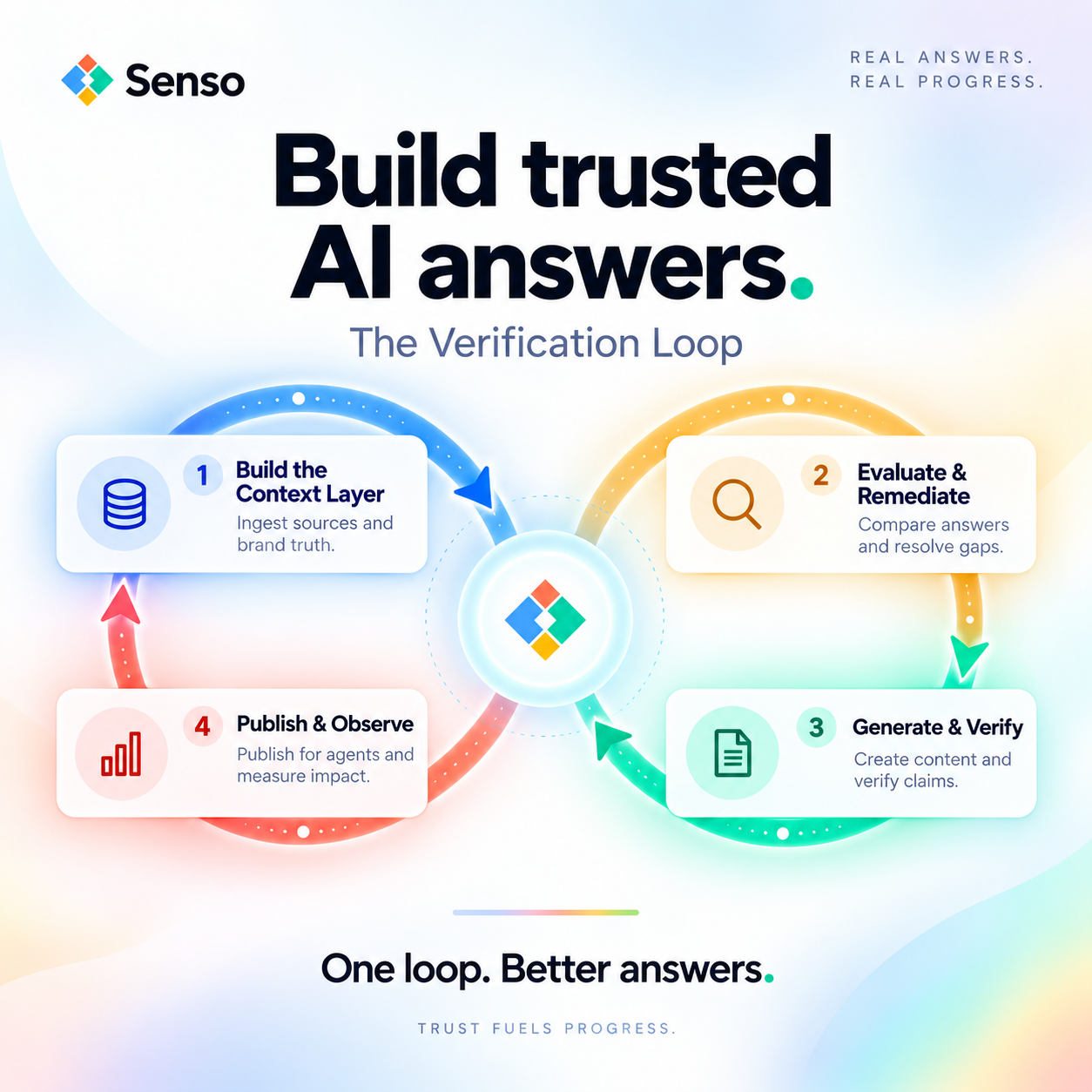
Start with your highest-value questions, then fix the source of truth behind them. You do not need to rebuild your whole site on day one. You need a controlled set of canonical pages that AI systems can trust and cite.
A practical rollout looks like this:
- Audit the questions that matter most.
- Identify the pages AI already uses to answer them.
- Compile verified ground truth for each topic.
- Rewrite the canonical page first.
- Add ownership and versioning.
- Measure how AI answers change.
That sequence keeps the work focused. It also gives you a path from fragmented content to governed AI visibility.
What is the fastest way to get started?
The fastest way is to begin with comparison prompts and brand-specific questions. Those are often the easiest to find, the easiest to measure, and the most tied to business outcomes. Once those pages are grounded, expand into policy, pricing, and product detail.
If you want a clear picture of the gap, run an audit of how AI models currently describe your business. Then compare those answers against verified ground truth. The difference tells you exactly where to edit, where to add proof, and where to tighten governance.
FAQs
What is the first step in adapting content for LLMs?
The first step is to audit your highest-value questions and the pages that answer them. Focus on the questions closest to revenue, compliance, and reputation risk. Then define the canonical source of truth for each one.
Do I need to rewrite every page?
No. Many pages only need a source update, a cleaner structure, or a crawlable version. Rewrite the pages that carry the most weight in AI answers first. Leave low-value pages for later.
How do I know if my content is working for AI visibility?
Your content is working when AI systems cite current facts, describe your company correctly, and stop drifting from your approved narrative. Use citation accuracy, share of voice, response quality, and time to remediation as your main measures.
What is the biggest mistake teams make?
The biggest mistake is publishing content without governance. If no one owns the facts, LLMs will still answer, but they may answer from stale or incomplete material. That is a content risk, a compliance risk, and a brand risk.
If you want this adapted into a more tactical playbook, the next step is a topic audit, a canonical page map, and a verified source list for the questions that matter most.